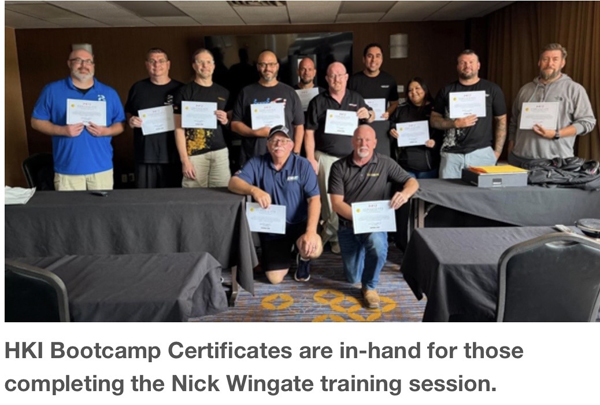
AUSTIN, TX (07.27.26) – We had a training with Nick Wingate at HKI’s Bootcamp in Austin, Texas. We talked about the future of the industry and where dealers need to put more focus. Some of the things we discussed got me thinking, and I wrote an article that I feel portrays exactly where we are heading as an industry and what we need to do.
The Wealth Shift
Why I Believe the Future of Premium Mobile Electronics Belongs to the 50+ Customer, let me explain.
I’ve been in the mobile electronics industry for more than 30 years. I’ve watched cassette decks turn into CD players, CD players turn into touchscreens, and simple speaker installs evolve into sophisticated OEM integration and DSP tuning. During that time, one thing has become clear to me: our industry has changed, but in many ways, our thinking hasn’t.
For years we’ve been chasing the next generation of customers. We keep asking the same question: “How do we get younger people excited about car audio?” It’s a fair question, and we absolutely need young enthusiasts to keep this industry alive. But I think we’ve been asking the wrong question.

The better question is this: Who has the passion for great sound and the financial ability to invest in it today?
I believe the answer is sitting right in front of us. It’s the same people who built this industry in the first place.
The teenager who scraped together enough money to buy his first amplifier in the late ’80s or early ‘90s is now in his fifties or sixties. Back then, he wanted to be the loudest guy in the parking lot. Today, he drives a Denali, a King Ranch, a luxury SUV, or maybe a restored classic car. He probably owns a boat, an RV, or a side-by-side. His life has changed, but one thing hasn’t, he still loves music.
What’s different is what he wants from his system.
When we were younger, louder usually meant better. We wanted bass that rattled windows and systems that got everyone’s attention. Today, many of us want something completely different. We want to close the doors, turn up our favorite song, and feel like we’re sitting in front of the stage or in the middle of a great home audio system. We want detail, clarity, balance, and realism. We want to hear the music the way the artist intended.
That’s the customer I believe our industry should be paying more attention to.
The numbers back it up. Consumers over the age of 50 account for more than half of all consumer spending in the United States and represent the majority of spending on new vehicles. Household wealth generally increases with age, and many people in this group have spent decades building successful careers, businesses, investments, and retirement savings. They have the disposable income to invest in premium products when they see value.
Yet if you look at much of the marketing in our industry, you’d think we’re still trying to sell the same products to the same twenty-year-old customer we were chasing thirty years ago.
I’m not saying we should ignore younger buyers. Every industry needs new enthusiasts. But we also need to recognize that younger consumers face challenges that previous generations didn’t. Higher housing costs, larger debt burdens, and rising vehicle prices often make them much more careful about discretionary spending. That’s not a criticism, it’s simply the economic reality many of them are living in.
Meanwhile, the original car audio enthusiast has grown up.He’s buying luxury trucks instead of compact cars. He’s spending money on boats, motorcycles, RVs, travel, and hobbies. He understands quality, and he’s willing to pay for craftsmanship when he trusts the people doing the work.
That means our sales process has to change. We can’t keep leading with wattage, speaker sizes, and price. Those things matter, but they aren’t what motivates someone investing in a premium system. What they’re really buying is an experience. They’re buying the feeling they get when every instrument has its place, every vocal sounds natural, and every drive becomes something they look forward to.

I’ve said this for years: we’re not really selling speakers and amplifiers anymore. We’re selling emotion.
I also believe we need to stop thinking of ourselves as “car audio shops.” The future is much bigger than that. Today’s successful businesses are becoming mobile technology integration specialists. They work on luxury vehicles, boats, RVs, motorcycles, side-by-sides, and specialty vehicles. They understand factory electronics, digital signal processing, vehicle networking, and customer experience. They’re not just installing equipment, they’re engineering an experience that’s tailored to each customer.
I don’t believe the 12-volt industry is dying.I believe it’s evolving. The opportunity is still there, but it’s moved.
The customer who once walked into our stores looking for his first amplifier is now walking into dealerships buying a $90,000 truck. He’s still passionate about music. He’s simply looking for a different kind of solution than he was thirty years ago.
The companies that recognize that shift will build stronger businesses over the next decade. They’ll stop competing on price and start competing on expertise. They’ll attract customers who appreciate craftsmanship instead of discounts. Most importantly, they’ll build relationships that last far beyond a single installation.
The future of this industry isn’t about finding a brand-new customer.I think it’s about reconnecting with the customer who never stopped loving great sound.
– Boomer
The 12volt Central Studios thanks Boomer for his view of today’s 12volt retail landscape.