


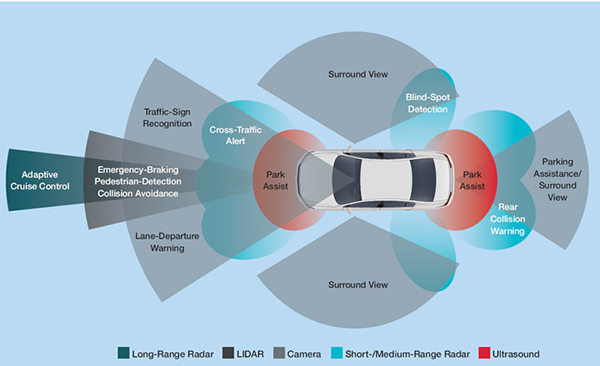
DIAMOND BAR, CA (08.30.23) – In May, the National Highway Traffic Safety Administration (NHTSA) issued a notice of proposed rulemaking (NPRM) relating to the adoption of a new Federal Motor Vehicle Safety Standard (FMVSS) to require automatic emergency braking (AEB), including pedestrian AEB, systems on light vehicles. These systems utilize various sensors and components to automatically apply a vehicle’s brakes in a crash-imminent situation when a driver fails to brake enough or at all.
Under the proposal, OEMs would be required to meet all the standard’s requirements within four years of publication. Small-volume manufacturers and alterers would have an additional year to comply.
NHTSA’s projections suggest the rule could save hundreds of lives and prevent tens of thousands of injuries to drivers, passengers and pedestrians annually. If adopted, the rule could significantly impact the aftermarket.

“Depending on the type of modification, and the vehicle make, model and year, it may be illegal to knowingly manufacture, sell or install any product–including aftermarket equipment–that would take a vehicle out of compliance with any safety standard, including the vehicle-based standards,” explained SEMA Senior Director of Federal Government Affairs Eric Snyder. “This is informally known as the ‘make inoperative’ provision. The implementation of a safety standard is what triggers the make-inoperative provision, and parts manufacturers must have a reasonable basis to conclude that their product won’t take a vehicle out of compliance with the standard.”

Currently, there is little data available to help anyone modifying an ADAS-equipped vehicle understand the exact degree of risk associated with changes to the vehicle. However, ongoing research at the SEMA Garage Detroit ADAS Research Center seeks to change all that.
Click here to read the full story on sema.org
Disclaimer: The information contained herein is only applicable to the specific ’22 Chevy Silverado LTZ vehicle used in the SEMA Garage research and the specified modifications and shall not be construed to indicate any results from additional modifications to the ’22 Silverado or for the modification of any other vehicle.





 12VoltNews.com