


This article was written by Larry Printz for TheDetroitBureau.com
DETROIT, MI (04.20.22) – This week, on April 14, 1964, the automotive press saw what the general public would see three days later, a new car that was first confirmed by a Ford Motor Co. press release in February.
“Ford Division confirmed today that it will introduce a new line of cars this spring,” said the press release issued Feb. 6, 1964, by Lee Iacocca, vice president of Ford Motor Co. “The new line of cars will be called the Mustang … no further details on the new car line will be revealed until the time of its public introduction.”
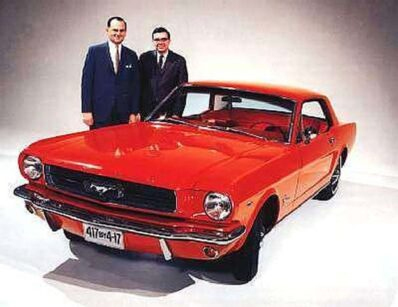
The car would become an icon for Ford and create a new class of automobile, the Pony Car.
With a 108-inch wheelbase, 2,500-pound curb weight and a $2,368 price tag, Ford sold 22,000 Mustangs on the first day. Its popularity proved unprecedented. But its development was a long one, having started in 1960.
Healthy sales despite stodgy cars
Ford’s bestseller at the time was the Ford Falcon, a sensible unexciting compact sedan introduced that year alongside such new competitors as the Chevrolet Corvair, Plymouth Valiant, AMC Rambler and Studebaker Lark. Ford’s bird was the most successful, selling more than 400,000 units in its initial year. The car was emblematic of the Ford line under Ford Motor President Robert McNamara: solid, conservative and dull.

As Ford Automotive Division general manager and vice president, McNamara took the two-seat Ford Thunderbird, introduced for 1955, and added rear seats in 1958, instantly eliminating its cache. The elegant, Lincoln Continental Mark II was dropped and the ungainly Edsel introduced instead, leading to a $250 million flop. In its wake, Henry Ford II proved reluctant to consider any new cars and the company’s products became increasingly stodgy and dull.
By 1960, McNamara was named Ford Automotive Division’s president, with Lee Iacocca inheriting his old spot, but the arrangement wouldn’t last long. When McNamara left Ford in late 1960 to become Secretary of Defense under President John F. Kennedy, Iacocca was named Ford Division President. He was 36 years old.

A market looking for a car
But Iacocca was becoming aware of the emerging youth market, one that was entering their teenage years and would soon be driving. He felt a car should be made to meet the market. In late 1960, Iacocca formed a committee of Ford managers to investigate the possibilities, but knowing Henry’s reluctance, convened the new team at The Fairlane Inn, a motor lodge two miles west of Ford World Headquarters in Dearborn, and away from prying eyes.
What the The Fairlane Committee discovered was what they termed “a market looking for a car.”
Ford market research had consistently shown that college educated consumers, like the Baby Boomers now coming of age, accounted for 46% of new car purchasers despite the fact they only made up 18% of the overall population. Research also showed that women car owners were one of the segments growing most quickly and that they would be the ones most likely to use a second car. But it would have to be small, maneuverable and be easy to park.





 12VoltNews.com