


This article was written by Paul A. Eisenstein for TheDetroitBureau.com
DETROIT, MI (01.08.2021) – In the automotive world, bigger has typically been equated with better. But where that was once measured in the length of a vehicle, the size of its fins, the output of its engine or the overall mass. These days, it seems, the best way for a manufacturer to say “Mine’s bigger” is to point to the video screen on the instrument panel.
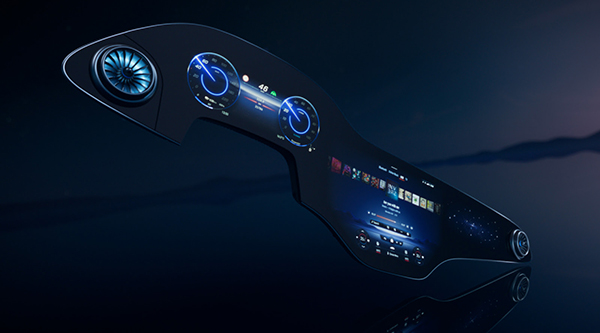
It may prove difficult to top what Mercedes-Benz has in store, however, as it prepares to release its new EQS battery car. Essentially an all-electric alternative to the familiar S-Class flagship, and the anchor of the new EQ sub-brand, it will offer as an option the large, subtly curved “Hyperscreen,” a video display panel extending, the company notes, “almost the entire width of the interior, from the left to the right A-pillar.
The sort of feature once found in fantasy-in-chrome concept vehicles, “With our MBUX Hyperscreen a design vision becomes reality,” said Gorden Wagener, chief design officer for the Daimler Group. “We merge technology with design in a fascinating way that offers the customer unprecedented ease of use. We love the simplicity we created with a new level of MBUX.”
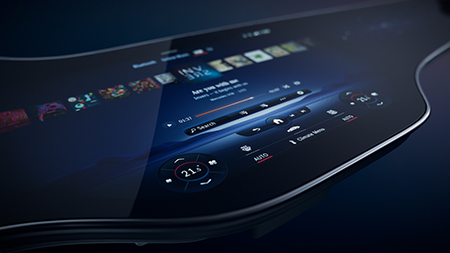
For those who haven’t followed the automotive technology race in recent years, automakers have gone from basic infotainment systems relying on kludgy knobs, buttons and touchpads to increasingly sophisticated interfaces that can operate much like the voice assistants revolutionizing home technology. The MBUX is, in basic function, much like Amazon’s Alexa. Simply say, “Hey, Mercedes,” and then ask it to change a radio station, plot out a route, check traffic or weather or find the answer to a question you and your passengers are debating.
The cloud-based system made its debut just a couple years ago in the latest-generation Mercedes C-Class but is now working its way through the rest of the German marque’s line-up. And, it claims, the version that will power the Hyperscreen will be significantly upgraded using artificial intelligence and “learn-capable software” that not only will take instructions, but also intuit personal needs and make its own suggestions.
It might remind you if you forget to make a call that you normally schedule at a particular time. Or it might suggest you turn on the hot stone massage when it’s cold outside and you’re heading out on a long drive. It also might check your calendar and recommend sending someone a greeting on their birthday.
Meanwhile, the massive screen will provide additional advantages. It can be difficult to provide much information on a 6-, 8, or even 10-inch touchscreen, requiring users to navigate through a series of menus to find what they need, such as changing radio stations, canceling a route or even turning on or off the seat heaters. The Hyperscreen will allow for a “zero-layer” feature where pretty much anything you might want will be within immediate reach, especially with the AI-powered system anticipating what you need.
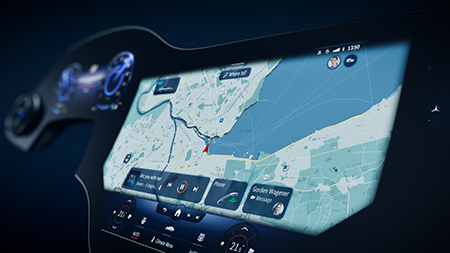
“The MBUX Hyperscreen is both the brain and nervous system of the car,” said Sajjad Khan, member of the Board of Management of Mercedes-Benz AG and CTO. “The MBUX Hyperscreen continually gets to know the customer better and delivers a tailored, personalized infotainment and operating offerings without the occupant needing to click or scroll anywhere.”
As with the large display in the current version of the Mercedes-Benz S-Class, the Hyperscreen actually blends together multiple screens but does so all but seamlessly, the automaker noted in a release. It uses the latest OLED display technology to deliver extreme levels of brightness and contrast.
The Hyperscreen is organic in appearance, rather than the boxy layout found in most vehicles, meaning it wraps around the center stack and steering wheel and even two of the EV’s turbine-like air vents.
Mercedes is by no means the only automaker betting that consumers want ever bigger screens. Tesla loaded a laptop-sized display in its original Model S and, today, similar screens are used to control virtually all vehicle functions. Ford’s new Mustang Mach-E has its own computer-sized display and, as TheDetroitBureau.com reported earlier this week, spy shots show a near door-to-door display in what may be a new crossover-style remake of the Ford Fusion. The curved display in Cadillac’s new Escalade SUV measures nearly three feet.





 12VoltNews.com